
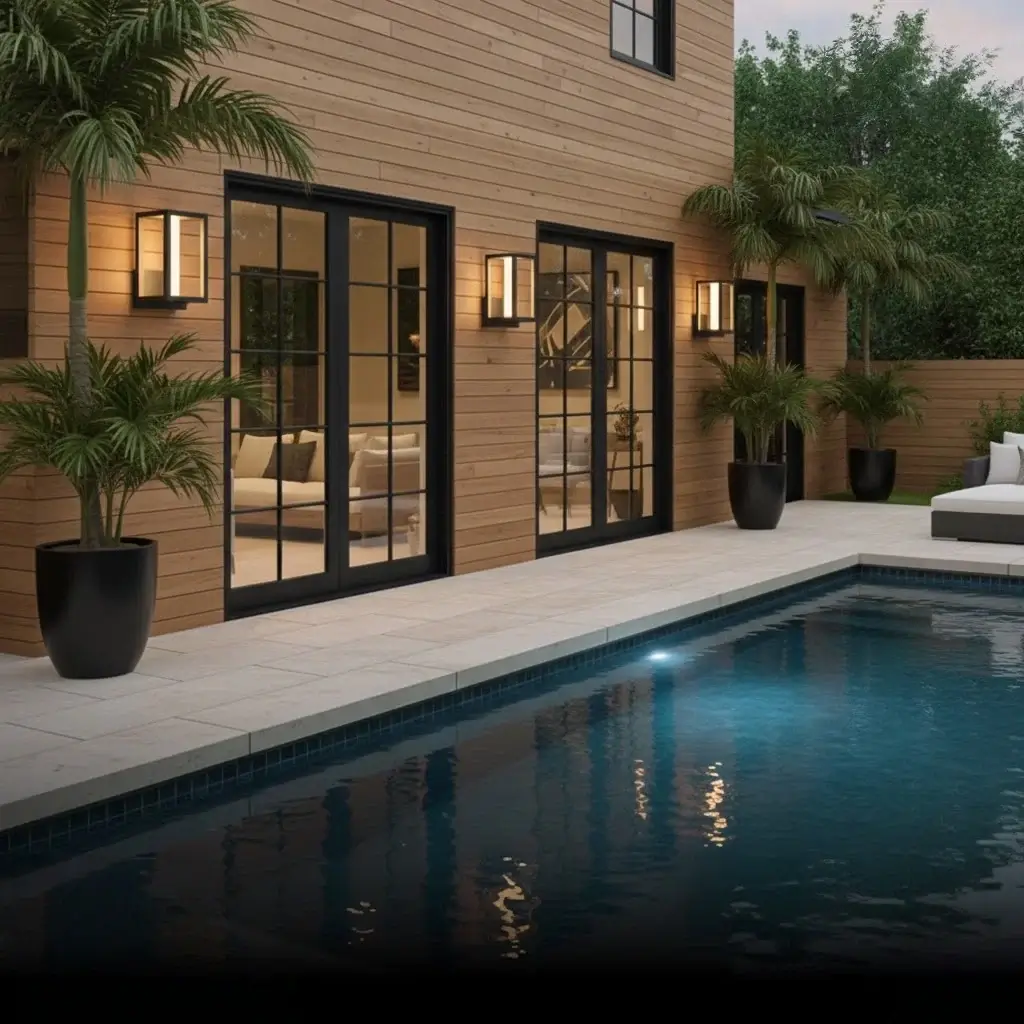
Stellen Sie sich vor, Sie kommen nach Sonnenuntergang nach Hause. Sie möchten, dass Ihr Haus einladend, sicher und beeindruckend wirkt. Die richtige Außenbeleuchtung kann Ihnen dabei helfen, dies zu erreichen. Die Wahl der richtigen Außenbeleuchtung verschönert nicht nur Ihr Anwesen. Die richtige Kombination aus Leuchtentyp und Stil kann die Sicherheit verbessern, die Attraktivität steigern und sogar den Wert Ihres Hauses erhöhen. Sie kann die Sicherheit verbessern, die Attraktivität steigern und sogar den Wert Ihres Hauses erhöhen. Überlegen Sie, wie Außenbeleuchtung dazu beitragen kann:
Die Architektur und Landschaftsgestaltung Ihres Hauses hervorzuheben und es attraktiver zu machen.
Eine einladende Atmosphäre zu schaffen und zu zeigen, dass Ihr Anwesen gut gepflegt ist.
Einbrecher abzuschrecken und das Einbruchsrisiko zu verringern.
Gehwege und Einfahrten zu beleuchten, um die Sicherheit aller zu gewährleisten.
Berücksichtigen Sie Ihre Bedürfnisse, Vorlieben und Ihr Budget, wenn Sie Ihre Optionen prüfen.
Wichtigste Erkenntnisse
Wählen Sie Außenbeleuchtung, um die Sicherheit und Attraktivität zu verbessern. Gut beleuchtete Bereiche schrecken Kriminalität ab und machen Ihr Zuhause einladend.
Berücksichtigen Sie verschiedene Arten von Außenleuchten, wie Wandleuchten und Wegeleuchten, die zur Architektur und den Bedürfnissen Ihres Hauses passen.
Wählen Sie energieeffiziente Optionen, wie LED- oder solarbetriebene Leuchten, um Stromkosten zu sparen und die Umweltbelastung zu reduzieren.
Integrieren Sie intelligente Funktionen wie Bewegungssensoren und Zeitschaltuhren für Komfort und verbesserte Sicherheit.
Planen Sie Ihre Beleuchtungsanordnung sorgfältig, um dunkle Stellen zu vermeiden und eine ordnungsgemäße Beleuchtung für Sicherheit und Ästhetik zu gewährleisten.
Außenleuchten für Wohnhäuser: Haupttypen
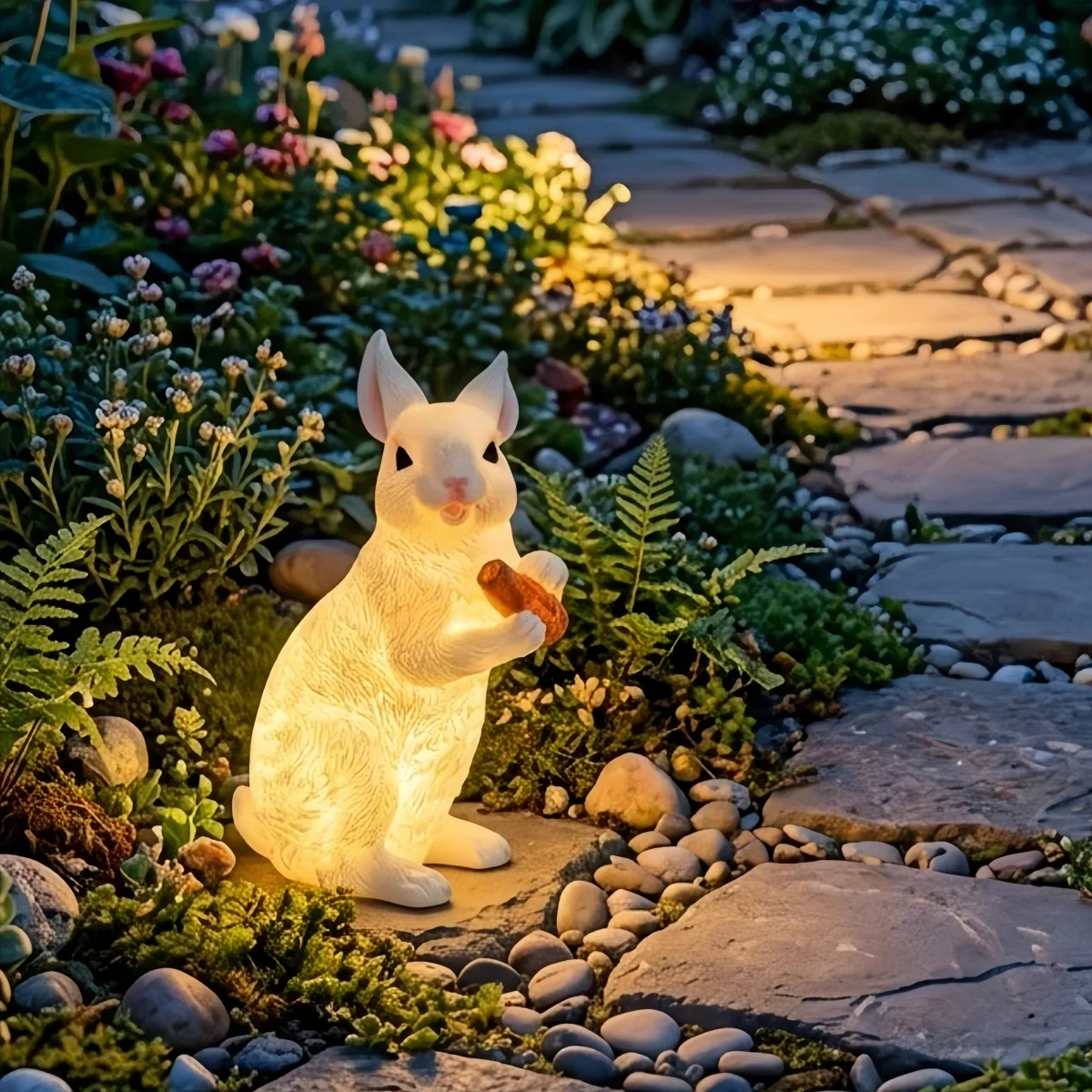
Sie haben viele Optionen bei der Wahl Ihrer Außenbeleuchtung. Jeder Typ dient einem einzigartigen Zweck und passt zu bestimmten Bereichen rund um Ihr Haus. Entdecken Sie die 7 Haupttypen von Außenleuchten für Ihr Anwesen:
Außenwandleuchte: An Außenwänden montiert, sind diese Ihre primäre Quelle für Sicherheit und Attraktivität. Sie installieren sie in der Nähe von Eingängen, neben der Garage oder entlang von Terrassenwänden. Viele verfügen über Bewegungssensoren, um Einbrecher abzuschrecken und eine großflächige Beleuchtung zu bieten (früher bekannt als Flutlichter oder Wandleuchten).
Außenmastleuchte: Diese robusten Leuchten stehen hoch entlang von Einfahrten, Grundstücksgrenzen oder auf Steinsäulen. Sie bieten eine robuste Beleuchtung, um Fahrzeuge und Besucher zu leiten, was sie ideal für größere Gärten und lange Einfahrten macht.
Außenpendelleuchte: Pendelleuchten hängen von Decken oder Überhängen. Sie werden über Esstischen im Freien, überdachten Terrassen oder großen Eingängen verwendet. Sie bieten fokussiertes Oberlicht und verleihen Außenwohnbereichen einen Hauch von moderner oder klassischer Eleganz.
Außenwegleuchte: Entwickelt, um Gehwege und Gartenwege zu beleuchten. Sie werden entlang von Gehwegen oder Blumenbeeten platziert, um Stolperunfälle zu vermeiden und Ihre Landschaftsgestaltung nachts schön hervorzuheben.
Außenstehleuchte: Perfekt, um Ihre Terrasse oder Ihr Deck in ein Wohnzimmer im Freien zu verwandeln. Diese spenden weiches, Umgebungslicht für Sitzbereiche und schaffen eine warme und einladende Atmosphäre für Gäste und entspannte Abende.
Außentreppenbeleuchtung: Bündig an Treppen, Terrassengeländern oder unter Sitzgelegenheiten installiert. Diese fokussieren Licht nach unten, um die Sicherheit auf unebenen Oberflächen zu verbessern und Ihrem Deck oder Ihrer Terrasse eine subtile, stilvolle Akzentbeleuchtung zu verleihen.
Außenbodenleuchte: Direkt in den Boden oder die Pflasterung eingelassen, strahlen diese Licht nach oben ab. Sie werden verwendet, um die Architektur Ihres Hauses, große Bäume oder Statuen hervorzuheben, ohne dass die Leuchte selbst sichtbar ist.
Außenbeleuchtungsmerkmale im Vergleich
Die Wahl der richtigen Außenbeleuchtung bedeutet, die Funktionen zu verstehen, die für Ihr Zuhause am wichtigsten sind. Sie müssen Stromquellen, Helligkeit, Smart Technology und andere Optionen vergleichen, um die beste Lösung für Ihre Bedürfnisse und Ihr Budget zu finden.
Stromversorgungsoptionen
Sie können aus verschiedenen Stromversorgungsoptionen für Ihre Außenbeleuchtung wählen. Jeder Typ bietet einzigartige Vorteile und Herausforderungen. Betrachten Sie die folgende Tabelle, um die wichtigsten Optionen zu vergleichen:
Stromquelle |
Beschreibung |
Kostenbereich |
|---|---|---|
Festverdrahtete Leuchten |
An das elektrische System Ihres Hauses angeschlossen für konstante Stromversorgung. Die Installation ist komplexer. |
100 - 200 $ pro Leuchte |
Solarbetriebene Leuchten |
Nutzen Solarenergie. Ideal für Bereiche ohne Stromanschluss. Kostenloser Betrieb, aber abhängig von Sonnenlicht. |
50 - 200 $ pro Leuchte |
Batteriebetriebene Leuchten |
Verwenden Batterien. Bieten flexible Platzierung ohne Verkabelung. |
50 - 150 $ pro Leuchte |
„Solarleuchten haben sich stark weiterentwickelt, und es gibt jetzt qualitativ bessere Optionen als nur die Plastik-Baumarktleuchten der Vergangenheit.“
Festverdrahtete Leuchten bieten zuverlässige Leistung, erfordern jedoch eine professionelle Installation. Solarbetriebene Leuchten eignen sich gut für abgelegene Gebiete und senken die Energiekosten. Batteriebetriebene Leuchten bieten Ihnen Flexibilität für Akzent- oder temporäre Installationen.
Helligkeit und Abdeckung
Helligkeit und Abdeckung bestimmen, wie gut Ihre Außenbeleuchtung funktioniert. Sie sollten die Helligkeitsstufe dem Zweck jedes Bereichs anpassen. Die folgende Tabelle zeigt die durchschnittliche Helligkeit und Abdeckung für Ihre wichtigsten Beleuchtungsoptionen:
Lichttyp |
Durchschnittliche Helligkeit (Lumen) |
Beschreibung des Abdeckungsbereichs |
|---|---|---|
Außenwandleuchte |
400 - 1300 |
Große Abdeckung für Sicherheit, Einfahrten und Haupteingänge |
Außen-Säulenleuchte |
120 - 700 |
Ideal zur Markierung von Einfahrten, Grundstücksgrenzen und langen Wegen |
Außen-Pendelleuchte |
400 - 800 |
Fokussierte Abwärtsbeleuchtung für überdachte Terrassen und Veranden |
Außen-Wegeleuchte |
100 - 200 |
Sichere Beleuchtung für kurze Gehwege und Gartenränder |
Außen-Stehleuchte |
300 - 600 |
Gemütliche, ambiente Beleuchtung für Sitzbereiche im Freien |
Außen-Terrassenstufenleuchte |
12 - 100 |
Blendfreie Beleuchtung zur Vermeidung von Stolperfallen auf Treppen und Terrassen |
Außen-Bodenleuchte |
50 - 300 |
Fokussierte Aufwärtsbeleuchtung zur Hervorhebung von Landschaftsgestaltung oder Architektur |
Diese Empfehlungen entsprechen den Wohnrichtlinien der Illuminating Engineering Society (IES) und gewährleisten optimale Sichtbarkeit, ohne Lichtverschmutzung zu verursachen.
Sie sollten für Sicherheit und Eingänge eine höhere Helligkeit wählen. Niedrigere Werte eignen sich am besten für Ambiente und Wege. Balance zwischen Helligkeit und Energieeffizienz ist immer wichtig, und erwägen Sie LED-Optionen für langfristige Einsparungen.
Hinweis: Laut dem U.S. Department of Energy (DOE) verbrauchen auf Energy Star zertifizierte LED-Außenleuchten bis zu 90 % weniger Energie und halten bis zu 25-mal länger als herkömmliche Glühlampen.
Intelligente Außenbeleuchtungsfunktionen
Intelligente Außenbeleuchtung bietet Ihnen erweiterte Kontrolle und Effizienz. Sie können Ihre Beleuchtung mit einem Smartphone oder einem Hausautomationssystem fernsteuern. Diese Funktionen umfassen:
Fernsteuerung und Zeitplanung für mehr Komfort.
Einstellbare Helligkeits- und Farbeinstellungen.
Integration in die Hausautomation für Energiemanagement.
Im Jahr 2026 hat sich die Außenbeleuchtung weit über grundlegende Fernbedienungen hinausentwickelt. Um Ihr Zuhause wirklich zukunftssicher zu machen, achten Sie auf diese zukunftsweisenden Trends:
Der Matter-Protokollstandard: Sie müssen sich nicht mehr darum kümmern, ob eine Leuchte ausschließlich mit Apple HomeKit, Google Assistant oder Alexa funktioniert. Im Jahr 2026 achten Sie einfach auf das „Matter“-Zeichen. Dieser universelle Standard gewährleistet eine nahtlose Integration über alle Ihre Smart-Home-Geräte hinweg.
KI-gesteuerte vorausschauende Beleuchtung: Anstatt sich auf starre Timer zu verlassen, nutzen die neuesten intelligenten Systeme KI, um die Routinen Ihrer Familie zu lernen. Sie können die Helligkeit automatisch an lokale Wettervorhersagen, Sonnenuntergangszeiten und sogar vorhersagen, wann Sie normalerweise nach Hause kommen.
Solar- und Batteriespeicher der nächsten Generation: Dank Fortschritten in der Mikrobatterietechnologie können Solarmodule von 2026 die Energie viel effizienter speichern. Hochwertige Solarleuchten können jetzt über mehrere bewölkte Tage hinweg eine Ladung aufrechterhalten und so die Zuverlässigkeitslücke zwischen Solar- und festverdrahteten Optionen schließen.
Smart Home Integratoren bemerken, dass die Umstellung auf das Matter-Protokoll im Jahr 2026 die wichtigste Neuerung für Verbraucher ist, da sie Hausbesitzern endlich ermöglicht, Sicherheitsflutlichter und dekorative Wegeleuchten verschiedener Marken nahtlos unter einer einzigen, einheitlichen App zu kombinieren.
Bewegungssensoren und Zeitschaltuhren
Bewegungssensoren und Zeitschaltuhren spielen eine Schlüsselrolle in der Außenbeleuchtung. Sie können diese Funktionen nutzen, um die Sicherheit zu verbessern und Energieverschwendung zu reduzieren.
Bewegungssensoren aktivieren Lichter, wenn sie Bewegung erkennen, schrecken Eindringlinge ab und beleuchten dunkle Bereiche nur bei Bedarf.
Zeitschaltuhren sorgen dafür, dass Lichter zu bestimmten Zeiten ein- und ausgeschaltet werden, was hilft, Strom zu sparen und die Lebensdauer der Glühbirne zu verlängern.
Viele Optionen für intelligente Außenlampen verfügen jetzt über integrierte Bewegungssensoren und Zeitschaltuhren. Diese Funktionen machen Ihr Beleuchtungssystem reaktionsschneller und effizienter.
Einstellbare Farben und Wärme
Sie können das Ambiente Ihrer Außenbereiche mit einstellbaren Farben und Wärme anpassen. Die Farbtemperatur der Außenbeleuchtung reicht von warmweiß (2700K-3000K) bis kühlweiß (4000K-5000K).
Warme Lichter schaffen eine einladende, entspannende Atmosphäre für Terrassen und soziale Bereiche.
Kühle Lichter verbessern die Sichtbarkeit und eignen sich gut für Einfahrten, Eingänge und Sicherheit.
Durch das Mischen von warmen und kühlen Optionen können Sie die Stimmung für verschiedene Aktivitäten anpassen.
Eine intelligente Außenlampe mit Farbanpassungsfunktionen ermöglicht es Ihnen, je nach Bedarf zwischen gemütlichen und hellen Einstellungen zu wechseln.
Preisbereich
Die Preise für Außenbeleuchtung variieren stark. Die folgende Tabelle zeigt typische Preisspannen für einzelne Leuchten gängiger Typen:
Art der Außenbeleuchtung |
Preisspanne (pro Leuchte) |
|---|---|
Außenwandleuchte |
50 $ bis 250 $ |
Außen-Säulenleuchte |
250 $ bis 900 $ |
Außen-Pendelleuchte |
100 $ bis 350 $ |
Außen-Wegeleuchte |
50 $ bis 150 $ |
Außen-Stehleuchte |
150 $ bis 400 $ |
Außen-Terrassenstufenleuchte |
40 $ bis 120 $ |
Außen-Bodenleuchte |
85 $ bis 250 $ |
Hinweis: Die oben genannten Preise sind Schätzwerte pro einzelner Leuchte. Wenn Sie festverdrahtete Leuchten wählen, die einen professionellen Elektriker erfordern, rechnen Sie mit zusätzlichen Arbeitskosten von 100 bis 200 US-Dollar pro Leuchte.
Intelligente Außenbeleuchtung und energieeffiziente Funktionen können die Anschaffungskosten für Leuchten erhöhen, führen aber oft zu langfristigen Einsparungen. Indem Sie die Aufteilung zwischen Leuchtenkosten und Arbeitskosten verstehen, können Sie besser für ein einfaches DIY-Wochenendprojekt oder ein professionelles Landschaftsbeleuchtungssystem im vollen Umfang planen.
Beleuchtung an die Bedürfnisse des Hauses anpassen
Bei der Wahl der Außenbeleuchtung müssen Sie jede Leuchte an die individuellen Anforderungen Ihres Hauses anpassen. Der richtige Ansatz balanciert Funktion, Stil und Sicherheit aus. Berücksichtigen Sie diese Schlüsselfaktoren:
Funktionalität: Stellen Sie sicher, dass Ihre Leuchten ihrem beabsichtigten Zweck dienen, z. B. Beleuchtung zu Sicherheitszwecken, Ambiente oder beidem.
Ästhetik: Wählen Sie Leuchten, die den Stil Ihres Hauses und Ihren Außenbereich aufwerten.
Haltbarkeit: Wählen Sie Materialien, die dem Wetter standhalten und jahrelang halten.
Helligkeit: Passen Sie die Lichtleistung an jeden Bereich an und balancieren Sie Sicherheit mit Komfort aus.
Energieeffizienz: Entscheiden Sie sich für LED-Optionen, um Energie zu sparen und Kosten zu senken.
Intelligente Funktionen: Nutzen Sie Bewegungssensoren und Timer für Komfort und Einsparungen.
Sicherheitsbeleuchtung
Sie möchten Ihr Zuhause und Ihre Familie schützen. Sicherheitsbeleuchtung spielt eine entscheidende Rolle bei der Abschreckung von Eindringlingen und der Erhöhung der Sichtbarkeit. Gut platzierte Außenleuchten machen Ihr Grundstück für Kriminelle weniger attraktiv. Bewegungsaktivierte Leuchten entlarven Eindringlinge, wodurch sie sich verwundbar fühlen und dazu ermutigt werden, weiterzuziehen. Laut einer systematischen Überprüfung, die von der Campbell Collaboration (einem führenden Forschungsnetzwerk) veröffentlicht wurde, kann eine verbesserte Außenbeleuchtung zu einem Rückgang der Kriminalität in den Zielgebieten um 21 % führen. Wie Mark Reyes, ein lizenzierter Elektromeister, erklärt: „Einbrecher suchen den Weg des geringsten Widerstands. Ein bewegungsaktivierter 1200-Lumen-Flutlichtstrahler, der tote Winkel in der Nähe einer Garage oder eines Seitentors eliminiert, ist eines der effektivsten Abschreckungsmittel, die ein Hausbesitzer installieren kann.“
Tipp: Positionieren Sie Lichter an Eingängen, dunklen Ecken und entlang von Zäunen, um Verstecke zu eliminieren.
Empfohlene Lösungen für die Sicherheit umfassen:
Bewegungsaktivierte Beleuchtung, die sich bei Bewegung einschaltet.
Strategische Platzierung der Lichter, um alle gefährdeten Bereiche abzudecken.
Intelligente Außenbeleuchtungssysteme, die Fernsteuerung und Echtzeitwarnungen ermöglichen.
Beachten Sie, dass Bewegungssensoren manchmal Fehlalarme durch Tiere oder Wetter auslösen können. Sie sollten eine vollständige Abdeckung gewährleisten, um tote Winkel zu vermeiden. Eine professionelle Installation hilft, Ihr System an Ihr Grundstück anzupassen und die Einhaltung von Sicherheitsstandards zu gewährleisten.
Ambiente- und dekorative Beleuchtung
Beleuchtung für Ästhetik verwandelt Ihre Außenbereiche in einladende Rückzugsorte. Sie können Akzentbeleuchtung verwenden, um architektonische Merkmale, Bäume oder Gartenbeete hervorzuheben. Dekorative Optionen wie Lichterketten und Laternen verleihen Wärme und spiegeln Ihren persönlichen Stil wider.
Beliebte Wahlmöglichkeiten für das Ambiente sind:
Bodenleuchten für den Außenbereich, die nach oben gerichtet sind, um Tiefe zu verleihen und architektonische Merkmale oder Bäume hervorzuheben.
Stehlampen für den Außenbereich, die in der Nähe von Sitzbereichen platziert werden, um einen gemütlichen, wohnzimmerähnlichen Glanz auf Ihrer Terrasse zu erzeugen.
Pendelleuchten für den Außenbereich, die über Essbereichen hängen, für einen Hauch von Luxus und Raffinesse.
Wandleuchten für den Außenbereich mit warm getönten Glühbirnen, um einen entspannenden, einladenden Glanz auf Ihrer Terrasse oder Ihrem Deck zu verbreiten.
Die Stimmung Ihres Raumes hängt von der Farbtemperatur und Helligkeit ab. Warmes Licht (2700K–3000K) schafft eine beruhigende, angenehme Atmosphäre, perfekt für entspannte Abende. Kühleres Licht (4000K+) wirkt energiegeladener, kann aber die Entspannung stören. Sie sollten wärmere Töne für soziale Bereiche und kühlere Töne für aufgabenorientierte Räume wählen.
Hinweis: Durch die Mischung verschiedener Arten von Außenbeleuchtung können Sie Lichtschichten erzeugen, die sowohl die Schönheit als auch die Funktion verbessern.
Wege und Einfahrten
Beleuchtung für die Sicherheit ist unerlässlich für Gehwege und Einfahrten. Außenwegleuchten leiten Gäste sicher und verhindern Unfälle. Sie können aus mehreren effektiven Optionen wählen:
Art der Leuchte |
Vorteile |
|---|---|
Außenwegleuchten |
Beleuchten Wege, verbessern die Attraktivität und erhöhen die Sicherheit. |
Außenpfeilerleuchte |
Bietet starke, erhöhte Beleuchtung für lange Einfahrten und Grundstücksgrenzen; sehr langlebig bei jedem Wetter. |
Solar-Wegleuchten |
Umweltfreundlich und einfach zu installieren, aber bei bewölktem Wetter weniger zuverlässig. |
Niedervolt-LED-Wegleuchten |
Energieeffizient, langlebig und strahlen warmes Licht ab, ideal für große Flächen. |
Einbau-Wegleuchten |
Bieten einen modernen Look mit subtiler Beleuchtung, perfekt für Gärten und Terrassen. |
Sie können auch wandmontierte Beleuchtung für Häuser mit angrenzenden Strukturen verwenden. Intelligente Einfahrtsbeleuchtung bietet Ihnen bequeme Steuerung und zusätzliche Sicherheit. Richtig beleuchtete Wege erweitern das Gefühl der Sicherheit von Ihrem Eingang bis zum Rand Ihres Grundstücks. Sie heben auch Hindernisse hervor und helfen Familien mit Kindern oder älteren Mitgliedern, sich sicher zu bewegen.
Außenwegleuchten reduzieren die Gefahr von Stolpern und Stürzen.
Gut beleuchtete Einfahrten signalisieren, dass Ihr Grundstück überwacht wird, und schrecken Einbrecher ab.
Eingänge und Veranden
Ihr Eingangsbereich prägt den ersten Eindruck Ihres Zuhauses. Die richtige Außenbeleuchtung hier steigert die Attraktivität und hält Ihre Familie sicher. Wandleuchten auf beiden Seiten der Tür sorgen für eine ausgewogene Ausleuchtung und reduzieren Schatten. Deckenleuchten, wie Pendel- oder Aufbauleuchten, verteilen das Licht gleichmäßig über überdachte Veranden.
Beleuchtungsart |
Vorteile |
Anmerkungen |
|---|---|---|
Wandleuchten |
Verbessern Schönheit und Sicherheit, beleuchten Wege und Eingänge |
Oft mit Bewegungssensoren integriert |
Deckenleuchten |
Verteilen das Licht gleichmäßig über Eingangs-/Verandabereiche |
Ideal für überdachte Veranden oder Eingänge |
Bewegungsaktivierte Leuchten |
Verbessern die Sichtbarkeit und Sicherheit durch Beleuchtung dunkler Ecken |
Bieten Komfort und Sicherheit |
Sie können auch Einbauleuchten für einen modernen Look oder Pendelleuchten für Eleganz verwenden. Bewegungssensoren erhöhen den Komfort und verbessern die Sicherheit zusätzlich. Planen Sie die Platzierung Ihrer Leuchten, um die besten Merkmale Ihres Hauses hervorzuheben und einen sicheren Zugang für Gäste zu gewährleisten.
Denken Sie daran: Die beste Außenbeleuchtung für Eingangsbereiche kombiniert Stil, Sicherheit und intelligente Technologie für einen einladenden ersten Eindruck.
Praxisbeispiel: Eine Fallstudie zur Hausmodernisierung 2026
Um zu veranschaulichen, wie diese Prinzipien zusammenwirken, betrachten Sie eine typische Modernisierung eines Vorstadthauses, die auf Sicherheit und Attraktivität abzielt:
Die Herausforderung: Eine dunkle Einfahrt und eine schlecht beleuchtete Veranda führten zu Sicherheitsbedenken und Paketdiebstählen.
Die Lösung: Die Hausbesitzer installierten festverdrahtete, Matter-kompatible LED-Wandleuchten mit 1200-Lumen-Bewegungssensoren über der Garage. Für den Gehweg fügten sie Niedervolt-LED-Wegleuchten (150 Lumen, warm 2700K) hinzu, um Gäste sicher und blendfrei zu leiten.
Das Ergebnis: Die strategische Platzierung von Sicherheitsleuchten mit hoher Lumenzahl in Kombination mit einer automatisierten intelligenten Zeitplanung eliminierte vollständig tote Winkel, während die warmen Wegleuchten eine einladende Nachbarschaftsästhetik bewahrten.
Installations- und Wartungstipps
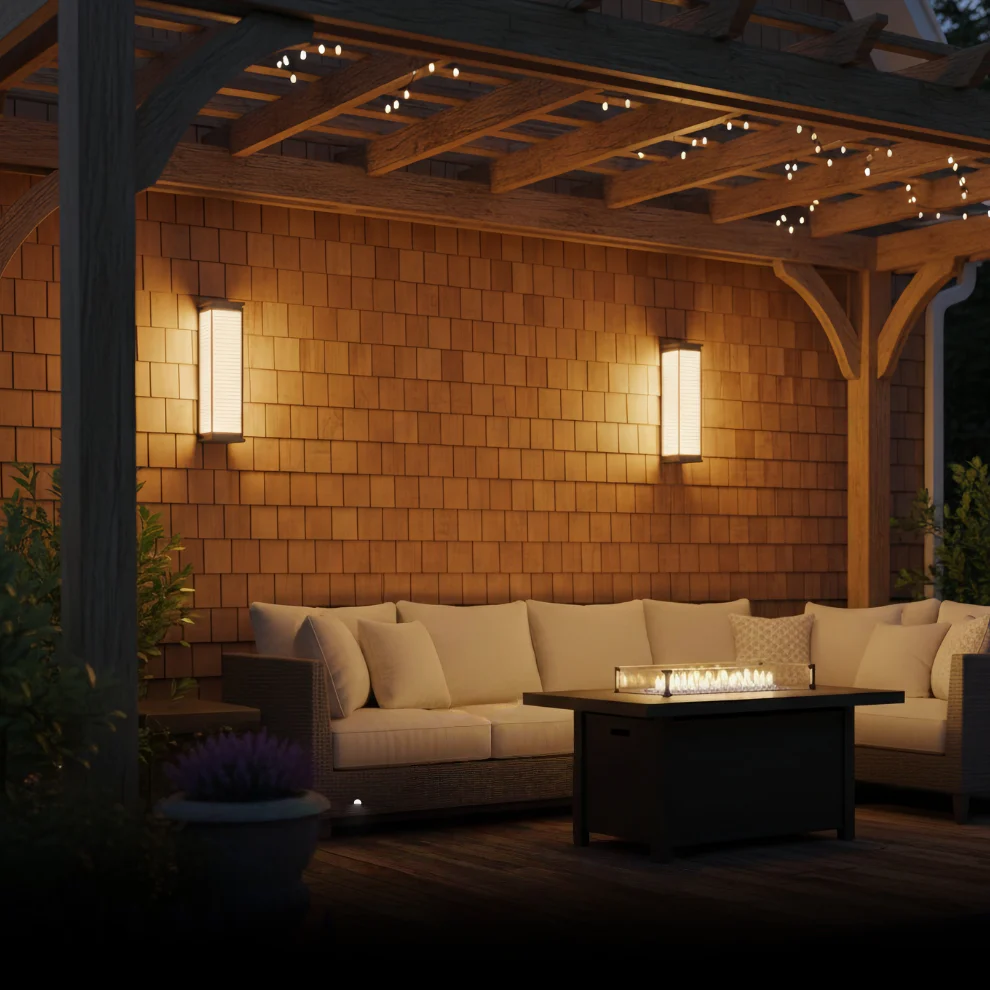
DIY vs. Profi
Wenn Sie die Installation von Außenbeleuchtung in Betracht ziehen, stehen Sie vor der Wahl zwischen DIY und professioneller Installation. Jeder Ansatz bietet einzigartige Vorteile und Herausforderungen. Wenn Sie praktische Projekte mögen, bietet Ihnen die DIY-Installation Flexibilität und Kontrolle über die Platzierung der Leuchten. Sie können aus einer Vielzahl von Optionen wählen, wie z.B. Wegleuchten, Wandleuchten, Deckleuchten und Lichterketten. Allerdings benötigen Sie grundlegende elektrische Kenntnisse und Zeit, um die Arbeit sicher abzuschließen.
Installationsart |
Kostenbereich |
Vorteile |
Nachteile |
|---|---|---|---|
DIY (Selbstinstallation) |
~850 $ für 10 Leuchten |
Niedrige Anfangskosten, hohe Flexibilität, ideal für kleine oder gezielte Upgrades |
Erfordert Installationskenntnisse, zeitaufwendig, geringere Qualität der Leuchten |
Professionelle Installation |
Bestes Design, hochwertige Materialien, Garantie- und Wartungsservice |
Höhere Kosten, weniger Kontrolle über den Installationsprozess |
Die professionelle Installation gewährleistet das beste Design und hochwertige Materialien. Sie erhalten auch Garantie- und Wartungsservice. Diese Option kostet mehr, aber Sie gewinnen Seelenfrieden und Expertenresultate.
Tipp: Wählen Sie langlebige Materialien wie Edelstahl oder verstärkten Kunststoff für Witterungsbeständigkeit.
Wartung und Langlebigkeit
Eine ordnungsgemäße Wartung verlängert die Lebensdauer Ihrer Außenbeleuchtung. Regelmäßige Aufgaben umfassen die Reinigung der Leuchten, die Überprüfung der Kabel und den Austausch von Glühbirnen. LED-Leuchten halten viel länger als Halogenlampen, oft über 25.000 Stunden Betriebsdauer.
Umsetzbare Schritte & Häufigkeit |
|
|---|---|
Reinigen von Leuchten & Solarpaneelen |
Glas und Solarpaneele alle 2-3 Monate mit einem feuchten Tuch abwischen, um zu verhindern, dass Schmutz die Helligkeit und Ladeeffizienz beeinträchtigt. |
Sensoren & Smart-Steuerungen testen |
Bewegungssensoren und Smart-Routinen halbjährlich überprüfen. Spinnweben oder Schmutz, die die Sensoraugen blockieren, entfernen. |
Kabel & Stromquellen überprüfen |
Einmal im Jahr (insbesondere nach dem Winter) freiliegende Kabel auf Witterungsschäden überprüfen und Batteriefächer auf Korrosion prüfen. |
Lampen wechseln (falls zutreffend) |
Bei nicht integrierten LED-Leuchten flackernde oder durchgebrannte Lampen sofort ersetzen, um elektrische Belastungen des Systems zu vermeiden. |
Sie sollten auch auf Funktionen wie Bewegungssensoren und Timer-Steuerungen achten. Diese Funktionen helfen, Energie zu sparen und den Verschleiß Ihres Systems zu reduzieren.
Funktion |
LED-Leuchten |
Halogenleuchten |
|---|---|---|
Lebensdauer |
Lang, oft 25.000+ Stunden |
Kurz, etwa 2.000 Stunden |
Energieeffizienz
Energieeffiziente Außenbeleuchtung reduziert Ihre Stromrechnung und Ihren ökologischen Fußabdruck. Moderne Optionen umfassen LED-Lampen, solarbetriebene Leuchten und Laternen mit eingebauten Sensoren. LEDs liefern höhere Helligkeit bei geringerem Stromverbrauch und sparen Ihnen auf lange Sicht Geld. Viele Außenleuchten verfügen heute über Reflektoren oder Abdeckungen, um Lichtverschmutzung zu reduzieren.
Durch den Wechsel zu energieeffizienter Beleuchtung können Sie etwa $225 pro Jahr sparen.
Die Beleuchtung macht etwa 15 % des Stromverbrauchs eines typischen Haushalts aus.
Durch die Verwendung von LED-Optionen können Sie die gleiche Helligkeit für weniger Geld erzielen.
Hinweis: Verwenden Sie Timer, Bewegungssensoren und Dämmerungssensoren, um Effizienz und Komfort zu maximieren.
Sie können aus einer Vielzahl von Optionen wählen, die Ihren Bedürfnissen entsprechen, von Solar-Wegleuchten bis hin zu LED-Flutlichtern mit Smart Controls. Diese Funktionen helfen Ihnen, eine sichere, schöne und kostengünstige Außenumgebung zu schaffen.
Kurzanleitung zur Entscheidung
Checkliste für die Auswahl
Sie möchten die beste Wahl für Ihre Außenbeleuchtung treffen. Verwenden Sie diese Checkliste, um Ihre Entscheidung zu leiten:
Identifizieren Sie Ihr Hauptziel. Benötigen Sie Sicherheit, Ambiente oder beides?
Bewerten Sie die Bereiche, die Sie beleuchten möchten. Gehen Sie nachts um Ihr Grundstück herum.
Wählen Sie den Stil, der zur Architektur Ihres Hauses passt.
Entscheiden Sie sich für die Stromquelle. Berücksichtigen Sie festverdrahtete, Solar- oder Batterieoptionen.
Überprüfen Sie Helligkeit und Abdeckung für jede Leuchte.
Suchen Sie nach intelligenten Funktionen wie Bewegungssensoren oder Timern.
Legen Sie Ihr Budget fest. Vergleichen Sie Preise und langfristige Einsparungen.
Planen Sie die Installation. Entscheiden Sie, ob Sie es selbst machen oder einen Fachmann beauftragen.
Überprüfen Sie den Wartungsbedarf und die Energieeffizienz.
Lesen Sie Produktbewertungen und holen Sie bei Bedarf Expertenrat ein.
Tipp: Machen Sie nachts Fotos von Ihrem Zuhause. Dies hilft Ihnen zu visualisieren, wo Außenbeleuchtung die größte Wirkung erzielt.
Häufige Fehler
Viele Hausbesitzer machen ähnliche Fehler bei der Auswahl der Außenbeleuchtung. Vermeiden Sie diese Fallstricke:
Die Bedeutung der Platzierung der Leuchte ignorieren. Eine schlechte Platzierung kann dunkle Stellen hinterlassen oder Blendung verursachen.
Energieeffizienz übersehen. Hoher Energieverbrauch erhöht die Kosten und belastet die Umwelt.
Stil über Funktion wählen. Eine schöne Leuchte, die nicht genügend Licht spendet, wird Ihre Bedürfnisse nicht erfüllen.
Wetterbeständigkeit vergessen. Außenbeleuchtung muss Regen, Wind und Sonne standhalten.
Regelmäßige Wartung überspringen. Schmutzige oder kaputte Leuchten verringern die Sicherheit und den Reiz des Hauses.
Sie können diese Fehler vermeiden, indem Sie sorgfältig planen und Ihre Optionen überprüfen. Außenbeleuchtung funktioniert am besten, wenn Sie die richtige Leuchte an jeden Bereich und Zweck anpassen.
Sie haben viele Möglichkeiten bei der Auswahl der Außenbeleuchtung für Ihr Zuhause. Die beste Wahl hängt von Ihren Bedürfnissen, Vorlieben und Ihrem Budget ab. Die Aufrüstung der Außenbeleuchtung bietet mehrere Vorteile:
Gut beleuchtete Bereiche reduzieren Unfälle und schrecken Kriminalität ab, was die Sicherheit und den Seelenfrieden verbessert.
Attraktive Installationen erhöhen die Attraktivität des Hauses und können den Immobilienwert steigern. Fast die Hälfte der Käufer hält Außenbeleuchtung für unerlässlich.
Die richtige Beleuchtung verlängert die Nutzung von Außenbereichen nach Einbruch der Dunkelheit und macht sie funktionaler.
Bewerten Sie Ihr Eigentum, legen Sie Ihre Ziele fest und verwenden Sie diese kurze Checkliste:
Identifizieren Sie Bereiche, die Außenbeleuchtung benötigen.
Passen Sie den Leuchtenstil an das Design Ihres Hauses an.
Wählen Sie Funktionen, die zu Ihrem Lebensstil passen.
FAQ
Was ist das beste Außenlicht für die Sicherheit?
Sie sollten Außenwandleuchten mit Bewegungssensoren wählen. Diese Leuchten decken große Bereiche ab und aktivieren sich, wenn sie Bewegung erkennen. Mit dieser Einrichtung erhöhen Sie die Sicherheit und schrecken Eindringlinge ab.
Wie wähle ich die richtige Helligkeit für Außenleuchten?
Überprüfen Sie die Lumen-Bewertung. Für Wege verwenden Sie 100–200 Lumen. Für die Sicherheit wählen Sie 700–1300 Lumen. Sie passen die Helligkeit an den Zweck jedes Bereichs an.
Kann ich Außenleuchten selbst installieren?
Solar- oder batteriebetriebene Leuchten können Sie einfach installieren. Festverdrahtete Leuchten erfordern elektrische Kenntnisse. Ziehen Sie für komplexe Installationen einen Fachmann in Betracht.
Lohnt sich die Investition in intelligente Außenleuchten?
Smarte Leuchten bieten Fernsteuerung, Zeitplanung und Energieeinsparungen. Sie gewinnen an Komfort und Flexibilität. Viele Hausbesitzer finden diese Funktionen wertvoll.
Wie pflege ich Außenbeleuchtung?
Reinigen Sie die Leuchten regelmäßig.
Ersetzen Sie Glühbirnen bei Bedarf.
Überprüfen Sie Kabel und Verbindungen. Sie verlängern die Lebensdauer und halten Ihr System effizient am Laufen.
Aktie:
3 einfache Schritte zur sicheren Verkabelung von Lichtschaltertypen im Jahr 2026
Beleuchtung für das Wohnzimmer leicht gemacht mit einfachen Tricks